













































What You Should Know
I walked everywhere in two pairs of boots. A leather pair I’ve had about twenty months, a faux suede pair I’ve had twelve. Both needed work.
A few years ago, I’d have thrown them out and opened my laptop to find new ones. Instead I spent $75 at a cobbler across from the Willis Tower and got both back the next day. Replacing them would have been $349.
Here’s roughly how long a pair should last you:
- Cemented sole, synthetic upper, worn almost daily: about a year before something needs attention
- Cemented sole, leather upper, worn almost daily: about a year and a half
- Welted or stitched sole: years, and genuinely decades with resoling
- Running shoes: 300 to 500 miles, and that’s a different question from this one
Price predicts almost none of this. Spend an hour reading people compare notes and you’ll find $400 sandals that fell apart in nine months sitting next to $100 New Balance that went eight years.
My own two pairs make the same point in the other direction. The $149 synthetic outlasted what it cost, and the $200 leather still lost the finish on its toe at six months.
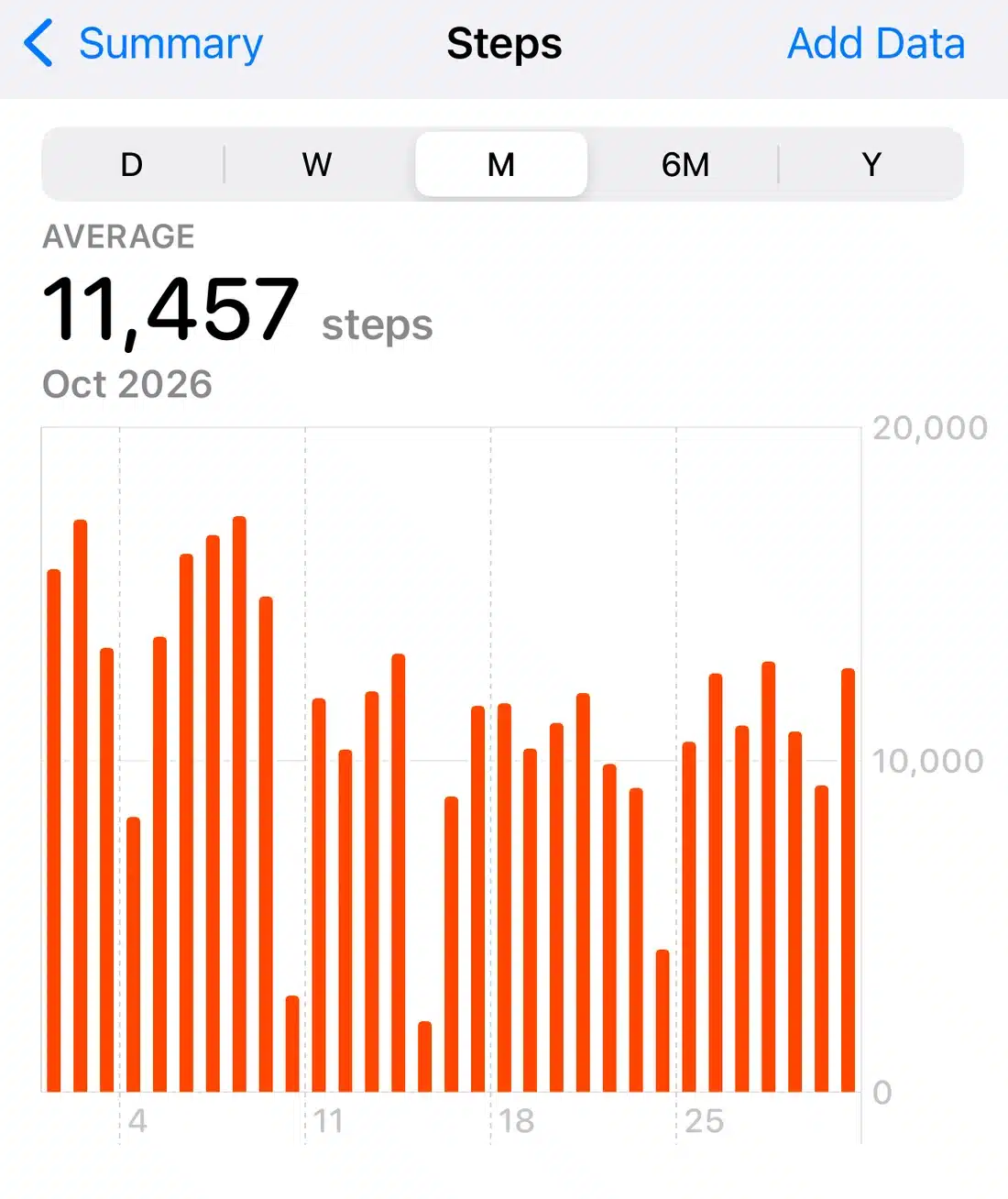
The thing that actually predicts it is how you get around. A lot of shoe longevity discourse assumes you drive around. But I walk often. This past October I averaged 11,457 steps a day, and more than half of those happened in boots.
What a Year of Walking Everywhere Did to Them
The leather pair, after about twenty months
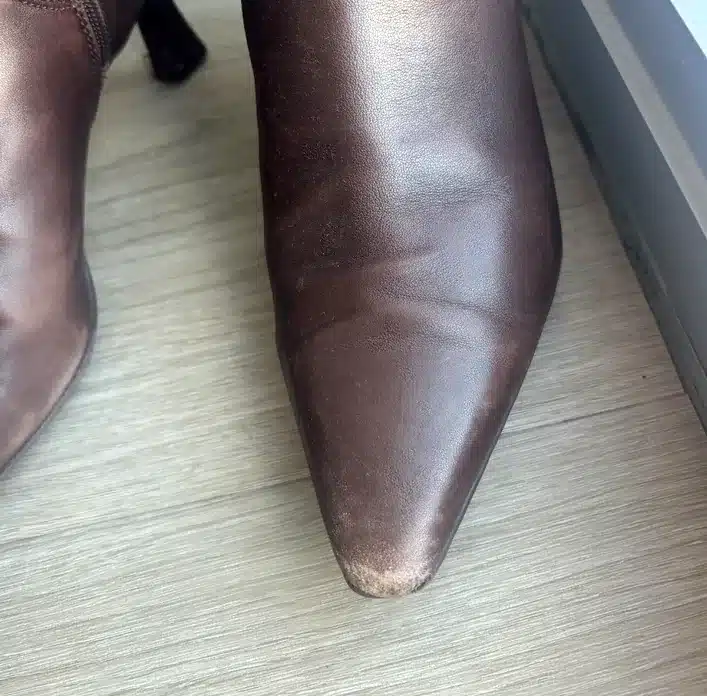
These are the Naturalizer Deesha, $200, bought in March 2025.
The finish on the very tip of the toe rubbed through at around six months. The heel tip wore down and rounded off at the back edge. The leather itself was fine, creased in a fan across the instep, which is what leather does when you bend it ten thousand times.
The faux suede pair, after twelve months
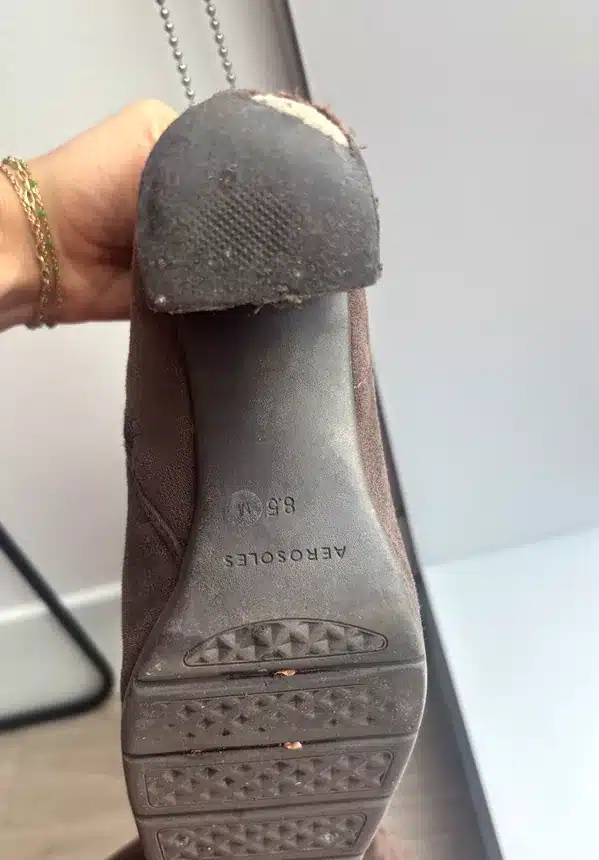
These are the Aerosoles Micah, $149, bought in November 2025.
The heel didn’t wear down. Rather, it wore through. Black rubber still in the middle, then a pale crescent at the back outer corner where the rubber was gone entirely and I was walking on the core. What used to be a soft step turned into an audible clip against the sidewalk.
The forefoot tread was almost untouched. All the wear landed on the one spot that takes the heel strike.
For fit, comfort and how each pair styles, here’s my full review of both boots.
Why I Took Them to a Cobbler Instead of Buying New

I intentionally own a small selection of shoes, so in the fall and winter both pairs of boots are pulling their weight.
They share the load with my espresso leather loafers and pointed ballet flats when the weather allows. But I wear the boots to events, on walks around the city, while I’m running errands, to dinners, and to the endless string of social gatherings I invariably end up getting pulled into as the holidays approach.
So it’s not like these were sitting in my closet. They were getting real wear.
A few years ago I would have thrown them out and hopped onto my computer to find new boots. But this year, being more intentional about cultivating a quality closet, I thought, I still very much appreciate the look of these boots. They just need attention.
Why not take them to someone who’s an expert at repairing shoes and see if we can keep them for another season?
How I Found a Cobbler, and What It Was Like
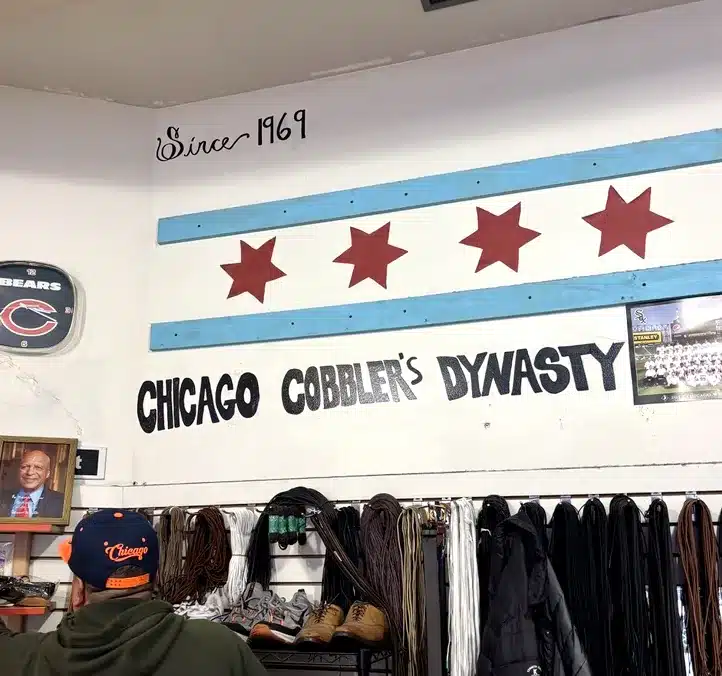
I found Chicago Cobblers Dynasty the way one finds most things these days, through an online search. I had an event in the Loop and wanted somewhere close by.
The reviews mentioned quick turnaround and reasonable prices. Since it was my first cobbler experience I didn’t have much to compare on price, but I did notice that places closer to my neighborhood came up with pricier quotes.
It sits right across from the Willis Tower, which is a well-placed spot given all the foot traffic from the offices clustered in the Loop. Painted on the wall above the Chicago flag is the year they opened, 1969. Fifty-seven years of fixing other people’s shoes, which is a credential that made me sanguine about leaving my shoes with them.
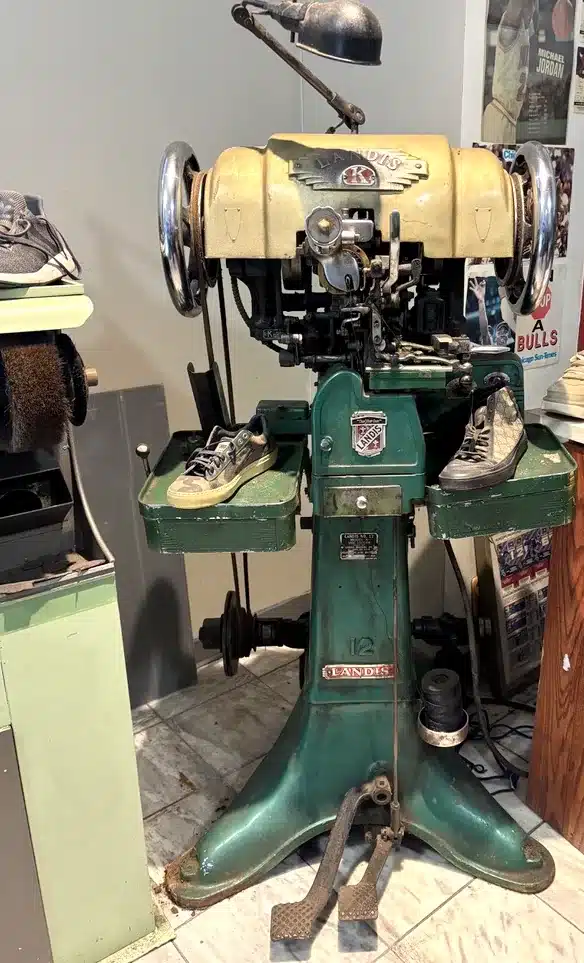
The unexpectedly pleasant part was how much of a homey local business feel it had.
The guys inside were serious about shoe repair and lighthearted in conversation, telling me about old school Chicago while the whir of tools hummed in the background.
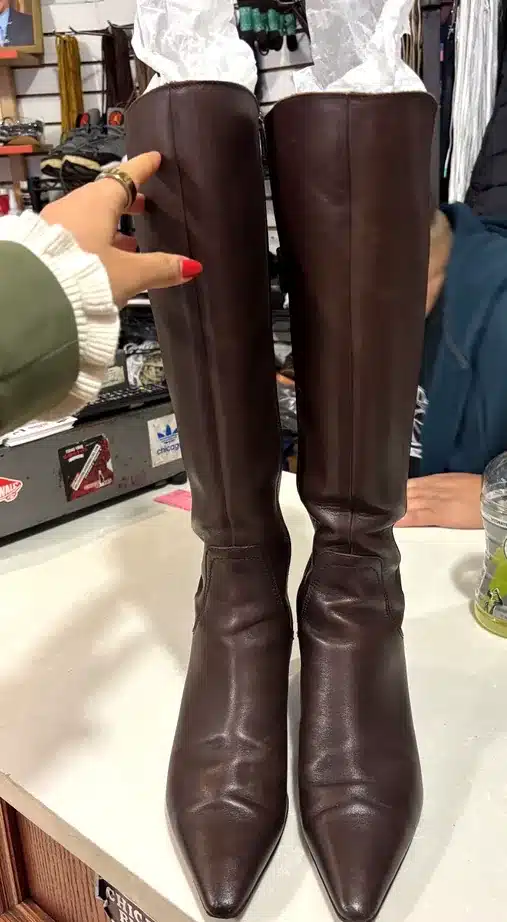
When I came back to collect mine, a man was having his shoes polished. There was another pair in the back, Italian loafers, and when they brought them out the jet black shine of them caught my eye. He explained that his father had a collection of beautiful loafers and left them to him. Lucky him.
We talked shoes briefly, and then he and the owner and I were talking about Italy, and then about Chicago, and how the city has changed in their eyes.
A little bubble of unexpected conversation in the heart of the Loop.
What a Cobbler Can Fix, and What He Can’t
What got done
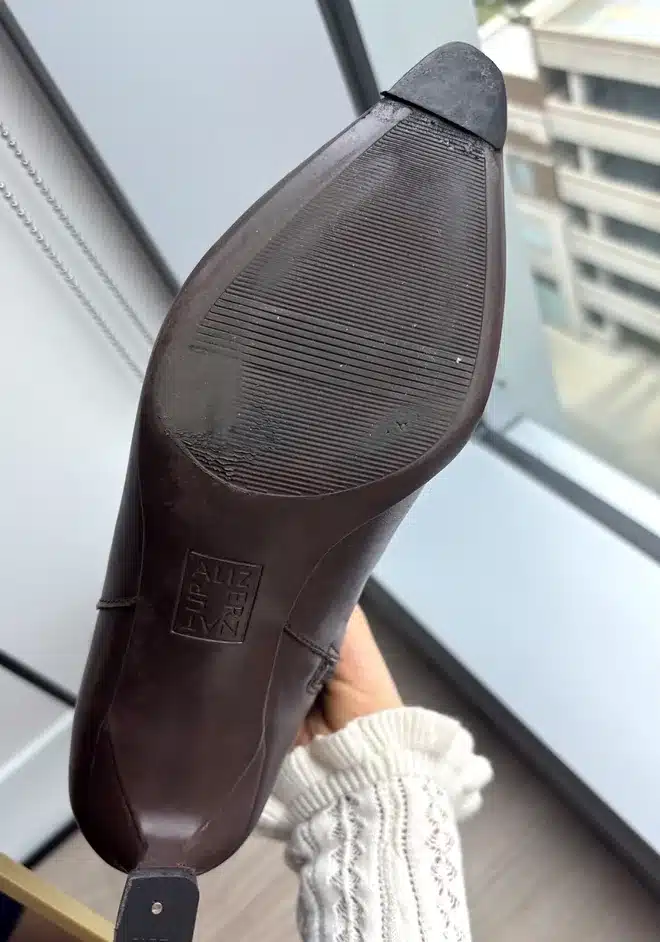
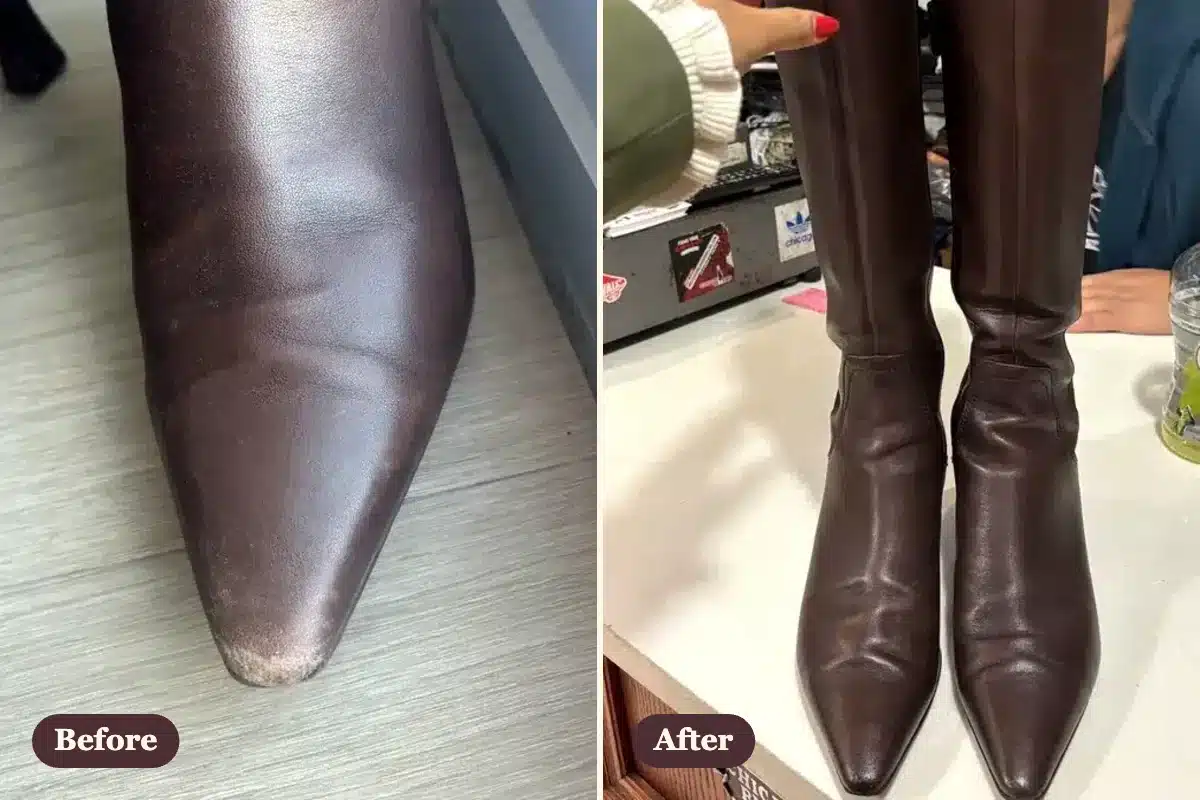
On the leather pair, they repolished the toes, replaced the heel tips, and added a small black tap at the point of the toe. Gustavo said it would help with sturdiness around the toe, which is exactly where mine had worn through. At the end they sprayed something on them to shine them off. I didn’t ask what.
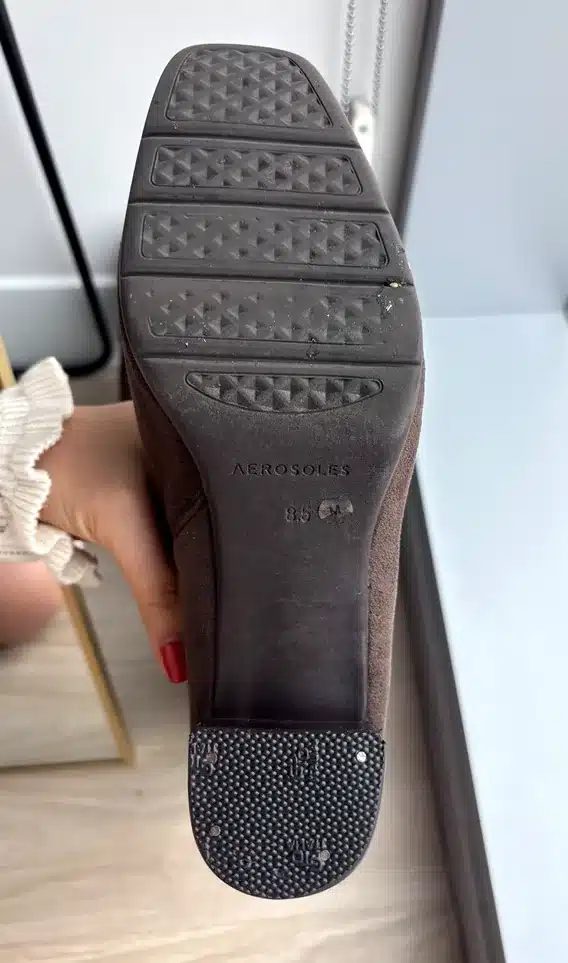
The faux suede pair just needed new heel caps. That’s the whole list. The clip against the sidewalk went away.
What he couldn’t do
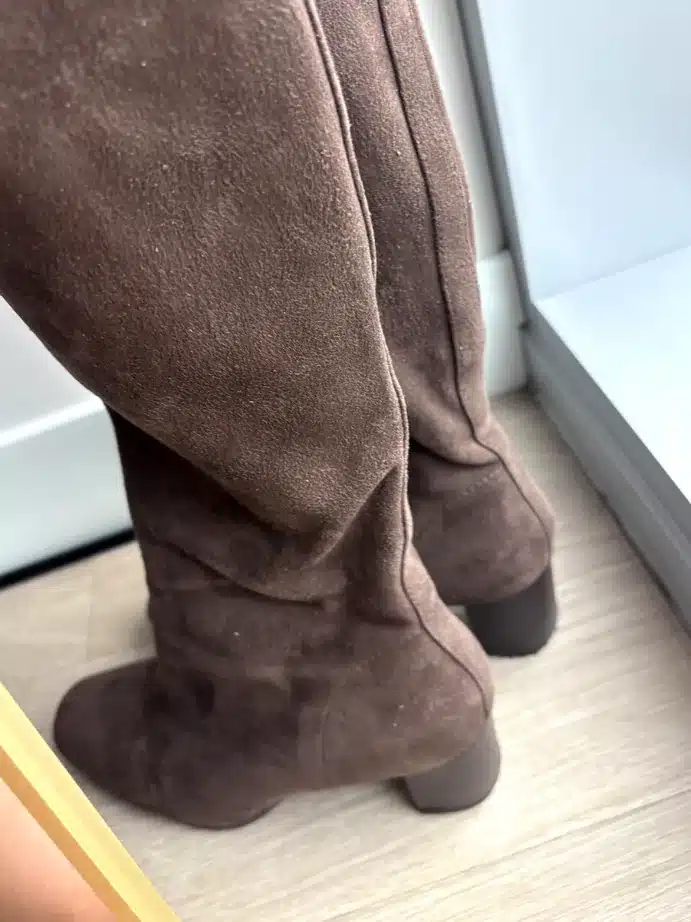
The nap on the faux suede is matted flat at the flex points and it isn’t coming back. Leather takes a polish. Synthetic doesn’t. The leather pair came back looking close to new. The suede pair walks like new and still looks worn.
Neither pair could be resoled, and most women’s boots can’t be
Every piece of repair advice I found said the same thing. Buy Goodyear welted, glued soles aren’t welts, get shoes that can be resoled. All true. But written about men’s shoes.
Both of mine are cemented, which means the sole and upper are glued together as one unit. There’s no resole available at any price. What you can get is heel tips, toe taps and protective soling.
That’s the normal case for women’s boots in this price range. Don’t take this to mean they’re disposable. Rather, it changes what you ask the cobbler for.
To Rotate or Not to Rotate
There’s a debate among those of us entrenched enough in the search for quality shoes. The standard advice is that you should own several pairs and alternate them, giving each one days off to dry out and recover, and that doing so makes them last far longer than wearing one pair straight through.
But others say there’s no real evidence for it.

I own four or five pairs for fall and winter and I do rotate based on weather, comfort and outfit. But I lean heavily on one or two pairs of boots through winter, aside from snow days when I need something more functional. The flats and loafers get some use. The boots get the majority.
What I’ve noticed is that a well-made boot, especially one you show a little love in the form of a trip to the cobbler, will hold up for the three or four months you actually need it. Sometimes my boots do sit idle, when I escape to Miami mid-winter or hop on a plane back to Arizona to see my sisters and rummage through their shoe collections.
So I’m not a clean test case for the rotation theory. But I wore two pairs harder than the advice says you should, and one of them went twenty months before it needed anything.
What The Shoe Repairs Cost
- Leather pair: $45
- Faux suede pair: $30
Turnaround was delightfully quick. I brought both pairs in on a Thursday around 3:30pm. Gustavo originally said a few days, then offered to have them ready that evening. I said I’d come back the next day, and when I did, both pairs looked much better.
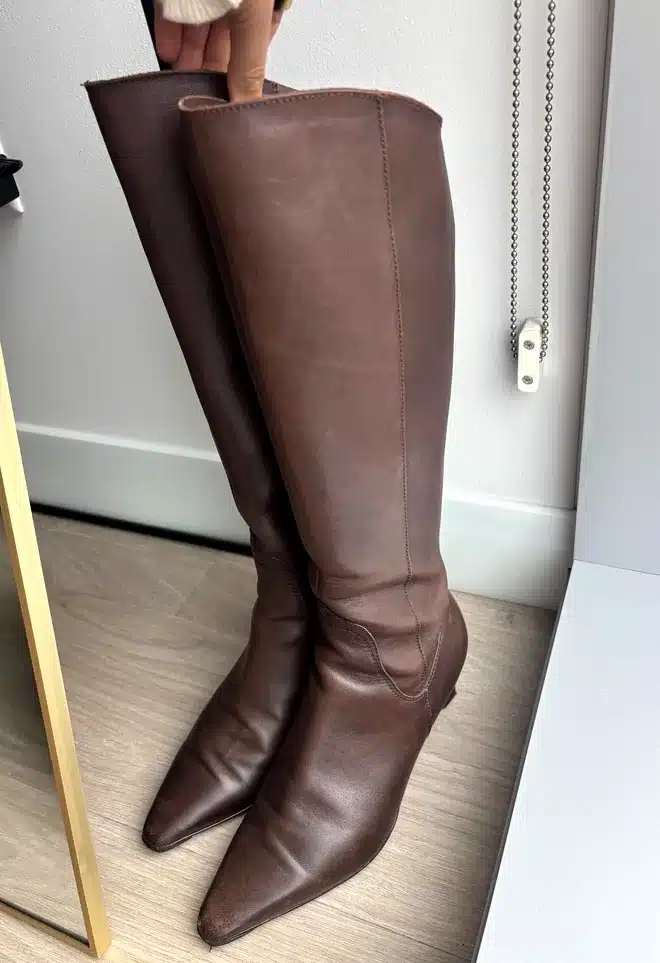
The math is the easy part. Replacing both pairs would have been $349. Repairing them was $75, and it kept the money with a local business. On cost per wear, two boots I’ve already worn for a combined thirty-two months just got cheaper again.
If I had to sum up the trip in two words, they’d be worth it. I’ll likely be back at the cobbler now that I’ve seen how they can breathe new life into old shoes.